

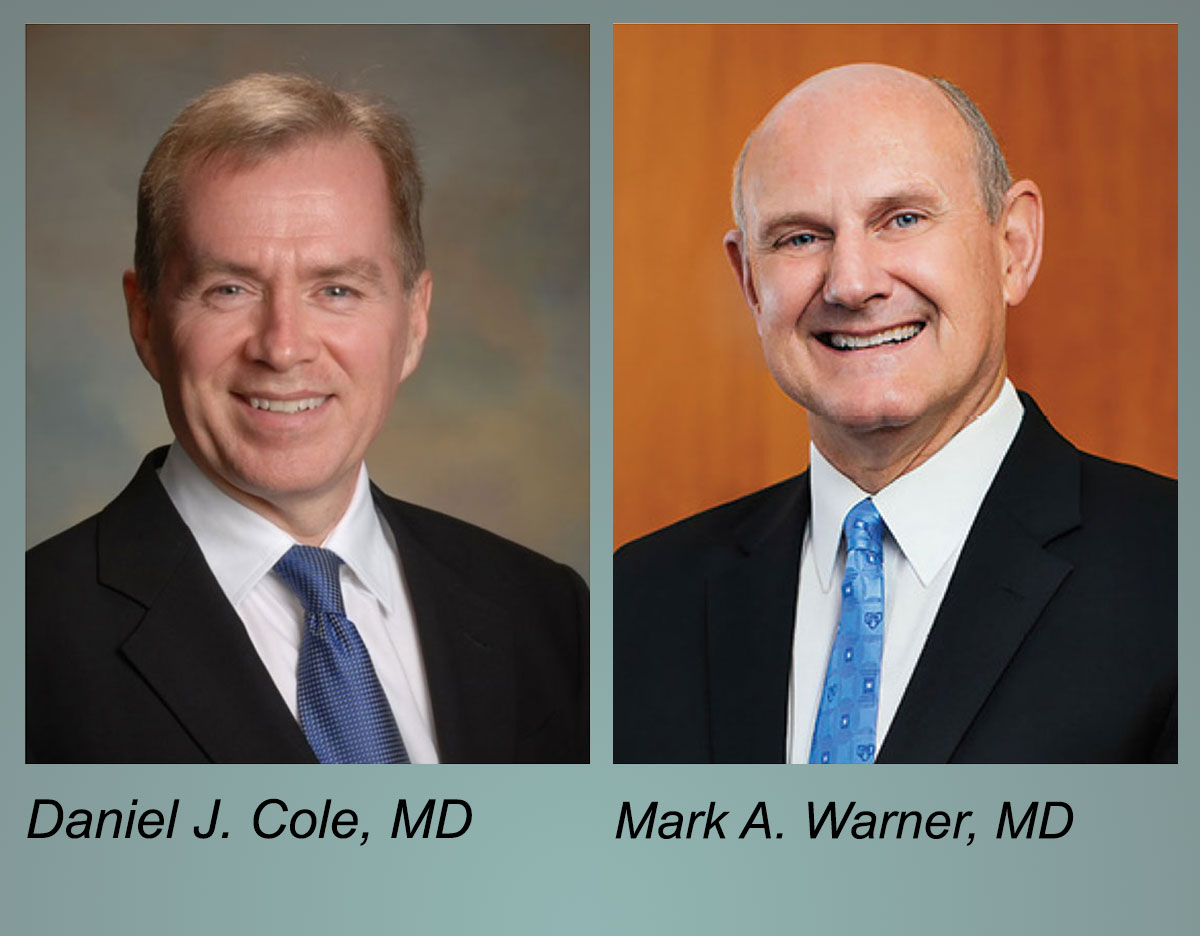
Authors: Mark A. Warner, MD; Daniel J. Cole, MD
Anesthesia Patient Safety Foundation Vo; 40 No 3 Oct 2025
Summary:Since 2000, the APSF has expanded its focus from anesthesia-specific safety to the broader perioperative setting, while extending its global influence. Building on dramatic safety gains of the late 20th century, the foundation emphasized new priorities, multidisciplinary collaboration, and worldwide dissemination of safety knowledge.
 The unprecedented improvement in anesthesia-specific patient safety from the start of the anesthesia patient safety movement in America until the turn of the century stands as one of the most significant achievements in medicine. The exponential reduction in patient harm from the 1980s through 2000 was remarkable, but unsustainable in high-income countries that had and used their resources to adopt new standards in anesthesia care, advanced technologies, and safer medications. The rate of improvement of anesthesia-specific perioperative morbidities and mortality subsequently slowed.
This represented a transition period in anesthesia patient safety, and the APSF responded by pursuing two distinct new approaches: (1) expansion of efforts to reduce perioperative patient harm, and (2), a focus on improving both anesthesia-specific and perioperative patient safety in lower-income, often under-resourced countries around the world.
TRANSITIONING TO PERIOPERATIVE PATIENT SAFETY
APSF’s first president and co-founder, Ellison (Jeep) Pierce, was well-aware by 1995 that unique collaboration between anesthesia leaders, their societies, and industry in the foundation’s first decade was crucial to the anesthesia patient safety movement’s amazing initial success in reducing anesthesia-specific patient harm, and that the coming years would be unlikely to experience such rapid improvements. In his 1996 Rovenstine Lecture at the ASA annual meeting, he summarized his insights about the need to transition anesthesia-specific patient safety to perioperative safety and to relentlessly pursue the potentially less exciting but necessary incremental improvements that would be needed into the future:1
Patient safety is not a fad. It is not a preoccupation of the past. It is not an objective that has been fulfilled or a reflection of a problem that has been solved. Patient safety is an ongoing necessity. It must be sustained by research, training, and daily application in the workplace.
—Ellison C. (Jeep) Pierce, MD
In response, since 2001 the APSF has sponsored annual consensus conferences to address specific issues that potentially impact patient safety.2 Conferences from 2001 through 2014 focused primarily on anesthesia-specific issues. During this period, studies accumulated and pointed to perioperative issues as the most significant problems leading to surgical morbidity and mortality. Daniel Sessler, one of the world’s most prolific and insightful clinician investigators in perioperative safety, implored anesthesia professionals everywhere to put their efforts into improving perioperative morbidity and mortality during his 2023 Rovenstine Lecture:3
One thing we can and should do is to establish intense postoperative management as a fourth branch of anesthesia. A radical change, yes, but necessary if anesthesia is to remain strong, and we need it now because the window of opportunity is brief. Carpe diem. Seize the day. Today.
—Daniel I. Sessler, MD
Since 2015, the APSF’s conference topics and many of the foundation’s communication efforts have shifted towards more expansive perioperative issues such as how to better communicate during handoffs of care, detect clinical deterioration earlier in the postoperative period, and involve family members in decision-making processes. The APSF has also recognized its invaluable industry partners and their many ongoing efforts in perioperative care. During the past decade, many of APSF’s research grants have focused on perioperative issues. This transition towards reducing perioperative patient harm will continue into the future.
ANESTHESIA AND PERIOPERATIVE PATIENT SAFETY IN LOWER RESOURCED COUNTRIES
Numerous reports on perioperative morbidity and mortality around the world have found very significant anesthesia patient safety issues associated with an absence or maldistribution of human, technology, and medication resources; few patient safety-related educational opportunities; and limited financial and institutional support for anesthesia and perioperative care.4 A number of national anesthesia and surgical organizations, the World Federation of Societies of Anaesthesiologists, the World Health Organization, the International Federation of Nurse Anesthetists, charitable organizations such as Lifebox, and other groups have increasingly focused their efforts on perioperative patient safety in lower income countries.
The APSF expanded its patient safety education efforts from its U.S. focus to include lower resourced countries around the globe in 2017. This change started with the introduction of translations of the APSF Newsletter. This effort has been very successful. In 2025, the newsletter is published in 8 languages. These languages are estimated by the World Health Organization to be readily understood by more than 90% of the world’s anesthesia professionals. The APSF also produces podcasts, videos, and other materials that are accessible to any anesthesia professional globally with cell or internet connections. A number of these are translated into languages other than English.
CONCLUSION
After an initial exponential reduction of anesthesia-specific harm to patients, the anesthesia patient safety movement in general, and the APSF specifically, have transitioned focus to comprehensive perioperative issues that cause harm to patients undergoing surgical and diagnostic procedures. Importantly, the APSF has joined with other leading organizations to promote efforts to improve anesthesia patient safety worldwide.
REFERENCES
- Pierce EC. 40 years behind the mask: safety revisited. Anesthesiology. 1996;84:965–975. PMID: 8638852.
- Past APSF Consensus Conferences and Recommendations. Anesthesia Patient Safety Foundation. Updated 2024. https://www.apsf.org/past-apsf-consensus-conferences-and-recommendations/ Accessed June 16, 2025.
- Sessler DI. The gathering storm. Anesthesiology. 2024;140:1068–1075. PMID: 38569091.
- Warner MA, Arnal D, Cole DJ, et al. Anesthesia patient safety: next steps to improve worldwide perioperative safety. Anesth Analg. 2022;135:6–19. PMID: 35389378.