

AlAyyaf A E, Alharran A M, Al-Mutairi M, et al. (May 23, 2026) Efficacy and Safety of Esketamine in Total Hip and Knee Arthroplasty: A Systematic Review and Meta-Analysis of Randomized Controlled Trials. Cureus 18(5): e109496. doi:10.7759/cureus.109496
Abstract
Background: Total hip arthroplasty (THA) and total knee arthroplasty (TKA) are commonly performed procedures, but post-operative recovery is often complicated by significant pain, opioid-related side effects, and psychological distress. Esketamine has been proposed as an adjunct due to its analgesic and antidepressant properties, but its efficacy and safety remain unclear.
Methods: A systematic review and meta-analysis of randomized controlled trials (RCTs) was performed by searching PubMed, Scopus, Web of Science, and Cochrane Central Register of Controlled Trials (CENTRAL) up to July 2025. Dichotomous and continuous outcomes were synthesized using risk ratios (RRs) and standardized or mean differences, each reported with 95% confidence intervals (CIs).
Results: Seven RCTs involving 1,101 patients were included. Esketamine did not significantly reduce pain at rest at 12 or 24 hours. Low-certainty evidence suggested that esketamine may reduce pain during activity at 12 hours (standardized mean difference (SMD): -0.28; 95% CI: -0.45, -0.12; p < 0.001), although this effect was not sustained at 24 hours. Very low-certainty evidence suggested a possible reduction in anxiety scores at post-operative day 7, with no significant effect observed at day 1. No clear effect on depression was observed at any time point. Esketamine was associated with a higher incidence of hallucinations (RR: 4.36; 95% CI (1.48, 12.88); p = 0.01), with no significant differences in delirium, nightmares, or post-operative nausea and vomiting.
Conclusions: Low- to very low-certainty evidence suggests that esketamine may provide modest short-term improvement in activity-related pain and delayed anxiety reduction following THA and TKA. However, findings should be interpreted cautiously given the limited number of studies, clinical heterogeneity, and instability observed in sensitivity analyses. Esketamine was also associated with an increased risk of hallucinations.
Introduction & Background
Total hip arthroplasty (THA) and total knee arthroplasty (TKA) are widely performed surgical procedures and are considered highly effective interventions globally, offering substantial improvements in quality of life for patients with end-stage joint diseases [1]. The aging of the global population is expected to result in a substantial increase in demand for these procedures over the next few decades [2]. Accordingly, several recent advancements have evolved, including robotic-assisted surgery [3,4] and unicompartmental arthroplasty [5], as well as novel MRI-based structural phenotyping, which may aid in predicting disease progression [6]. Although THA and TKA are usually successful, the time after surgery often involves significant complications that can slow healing and decrease patients’ satisfaction. Post-operative pain is frequently severe for patients, leading to opioid use and subsequent side effects, such as nausea, vomiting, and respiratory depression [7]. Additionally, rebound pain, characterized by a rapid and sharp increase in pain, can occur as the effects of regional anesthesia wear off [8].
In addition to physical pain, many patients, especially older adults, face a high risk of post-operative delirium (POD), an acute state of confusion associated with deteriorated recovery, more extended hospitalizations, and higher mortality rates [9]. The psychological impact is significant as well, with high rates of post-operative anxiety, depression, and sleep disturbance, all of which can hinder rehabilitation and long-term functional recovery [10,11]. These complex challenges highlight the necessity of innovative, multimodal pain management strategies that can both relieve pain and reduce the risk of related complications.
Esketamine, which is the S-enantiomer of ketamine, has shown potential in this regard. Esketamine’s unique pharmacology, as a potent NMDA receptor antagonist, provides benefits beyond simple analgesia [12,13]. The drug is thought to act by interfering with central sensitization, a critical process in the formation of long-term pain, and exhibits both anti-hyperalgesic and anti-inflammatory properties [14]. Also, increasing evidence indicates that esketamine’s fast-acting antidepressant properties make it an appealing choice for tackling the physical and psychological dimensions of recovery after surgery [15].
However, the current evidence regarding esketamine use during THA and TKA is inconsistent, leading to confusing evidence. For instance, while some studies suggest that esketamine can improve hemodynamic stability during anesthesia induction [16,17], its effect on preventing post-operative delirium remains contentious, with randomized controlled trials (RCTs) showing no significant benefit [16-19]. However, the evidence supporting its pain-relieving abilities seems stronger, as studies have shown it reduces rebound pain [18] and provides effective pain relief after surgery when used in patient-controlled intravenous analgesia (PCIA) systems [20]. The effects of esketamine on mood and sleep after surgery are being actively studied, but the findings are inconsistent.
The varying results could stem from differences in study design, patient groups, and, most importantly, the esketamine dosage and administration schedule. Due to the current conflicting evidence, there is a crucial gap in our understanding of how well and how safely esketamine works for patients undergoing THA or TKA before, during, and after the procedure. Therefore, this systematic review and meta-analysis aims to synthesize the available evidence from RCTs to clarify the role of esketamine in improving clinical outcomes following THA and TKA.
Review
Methodology
Protocol Registration
This systematic review was prospectively registered in the International Prospective Register of Systematic Reviews (PROSPERO; CRD420251145872). The study methodology adhered to the Preferred Reporting Items for Systematic Reviews and Meta-Analyses (PRISMA) guidelines [21] and followed recommendations from the Cochrane Handbook for Systematic Reviews of Interventions [22].
Data Sources and Search Strategy
On July 19, 2025, a literature search was systematically conducted by (A.M.A.) across several electronic databases: PubMed, Scopus, Web of Science, and the Cochrane Central Register of Controlled Trials (CENTRAL). The search strategy utilized a combination of keywords related to the procedure and the intervention: “(“Esketamine” OR “S-ketamine” OR “S ketamine” OR “Spravato” OR “JNJ-54135419”) AND (knee OR hip) AND (arthroplasty OR replac* OR prosthesis OR implant*)”. No restrictions were applied during the search, except in Scopus, where retrieval was limited to titles, abstracts, and keywords. The complete search strategy and database-specific results are presented in Appendix A. In addition, reference lists of included studies were manually screened to enhance completeness and minimize the risk of missing relevant articles.
Eligibility Criteria
RCTs adhering to the following Population, Intervention, Control, and Outcome (PICO) framework were eligible for inclusion: Population (P): Patients undergoing either TKA or THA; Intervention (I): Intravenous (IV) administration of esketamine, irrespective of dosing strategy or concomitant medications. Also, we included either intra-operative esketamine infusion or post-operative PCIA with esketamine; Control (C): Administration of a placebo or no intervention; Outcomes (O): The primary outcomes were post-operative pain severity assessed using validated tools such as the Visual Analog Scale (VAS) or Numerical Rating Scale (NRS). Pain outcomes were analyzed separately according to pain condition (pain at rest and pain during activity) and post-operative timepoint (12 and 24 hours), given the expected clinical variability in pain assessment across included studies. Secondary outcomes comprised intra-operative consumption of opioids and propofol, duration of surgery, post-operative depression, post-operative anxiety, length of hospital stay (LOS), and the incidence of adverse events (post-operative nausea & vomiting (PONV), dizziness, hallucinations, nightmares, and delirium). Hallucinations, delirium, nightmares, and post-operative nausea and vomiting were extracted as reported adverse events from the included trials. Most studies did not utilize standardized psychometric assessment tools specifically for hallucination evaluation. Delirium outcomes were extracted according to the assessment methods reported in the original studies, which varied across trials and included either clinical diagnosis or study-specific assessment tools and post-operative evaluation schedules.
Studies were excluded if they used quasi-randomized designs, evaluated non-standard routes of esketamine administration (e.g., local infiltration or nebulization), were available only as conference abstracts or proceedings, or were observational, in vitro, or review studies.
Study Selection
The screening and selection of studies were carried out by two independent reviewers (M.M.A. and A.E.A.) using Covidence software (Veritas Health Innovation, Melbourne, Australia). After the automatic removal of duplicates, the remaining unique articles underwent a two-phase screening process. Initially, titles and abstracts were reviewed, followed by a full-text assessment of the potentially eligible studies. Any disagreements between the reviewers were resolved through discussion to reach a consensus.
Data Extraction
A Microsoft Excel spreadsheet (Microsoft Corp., Redmond, WA, USA) was developed for data extraction, which was piloted using the full texts of the included articles. The extraction form was organized into three main sections, which are listed below.
Study characteristics: These included study ID, country, design, total number of patients, treatment protocols, type of surgery, adjuvant analgesia, primary outcome assessment tool, and key inclusion criteria.
Participant baseline characteristics: These comprised age, gender, body mass index (BMI), and American Society of Anesthesiologists (ASA) classification.
Outcome data: These included pain, depression, and anxiety scores at various follow-up intervals, intra-operative opioid consumption, intra-operative propofol consumption, surgery duration, LOS, and the frequency of adverse events.
Two reviewers (A.F.A. and W.B.A.) independently extracted the data. Any discrepancies were resolved through discussion and consultation with a senior author. Dichotomous data were extracted as the number of events and total participants, whereas continuous data were extracted as the mean and standard deviation. We utilized the formulas proposed by Wan et al. [23] to convert data presented as median and interquartile range or range into mean and standard deviation. The online tool WebPlotDigitizer [24] was also used to extract numerical data from graphs.
Risk of Bias and Certainty of Evidence
The methodological quality and risk of bias for each included RCT were assessed using the revised Cochrane Collaboration’s Risk of Bias tool (RoB 2) [25]. Two reviewers (M.A.B. and M.M.A.) independently assessed each study across key domains, including selection, performance, reporting, and attrition bias. Any disagreements were resolved through discussion. Furthermore, the overall certainty of evidence was evaluated using the Grading of Recommendations Assessment, Development, and Evaluation (GRADE) framework [26,27]. This approach evaluates domains including risk of bias, inconsistency, indirectness, imprecision, and publication bias. Each factor was carefully assessed, and the rationale for each judgment was documented, with any discrepancies resolved through discussion.
Statistical Analysis
Statistical analyses were conducted using Stata MP version 18 (StataCorp LLC, College Station, TX). Risk ratios (RRs) were used for dichotomous outcomes, while mean differences (MDs) were applied for continuous variables, with results reported alongside 95% confidence intervals (CIs). Standardized MDs (SMDs) were used when outcomes were assessed using different measurement scales. Given the expected clinical heterogeneity across included studies, random-effects models were preferentially applied for pooled analyses, while heterogeneity was assessed using the chi-square (χ²) test and quantified using the I² statistic. Between-study variance was estimated using the DerSimonian-Laird (DL) method. A p-value less than 0.1 for the χ² test or an I² value ≥50% was considered indicative of substantial heterogeneity. Due to the limited number of included studies and outcome events, publication bias testing was not formally performed. Findings were interpreted cautiously in light of the small number of studies, clinical heterogeneity, and sensitivity analysis instability observed for several outcomes [28].
Results
Search Results and Study Selection
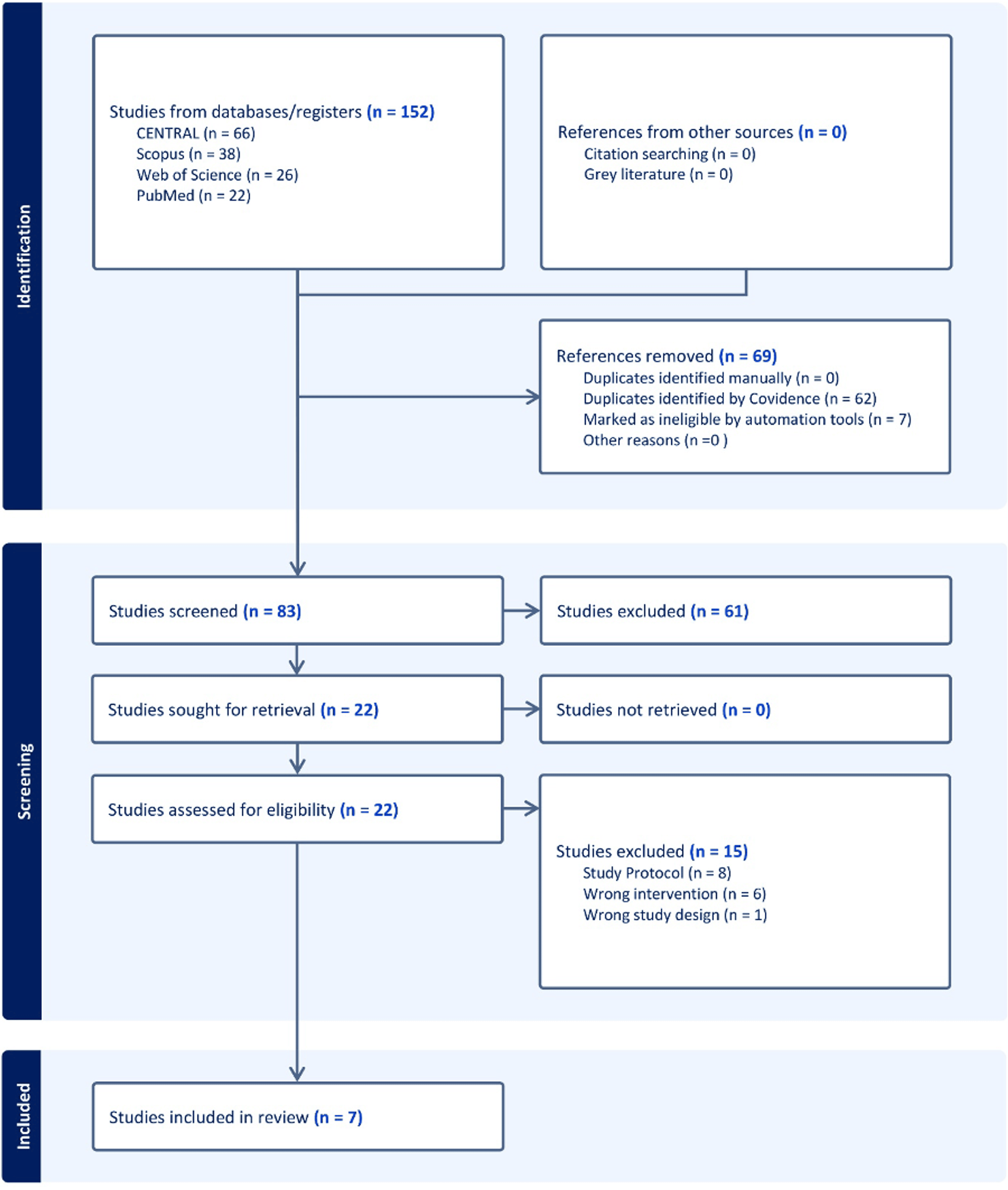
The initial database search identified 152 records. After 69 duplicates were automatically removed, the titles and abstracts of the remaining 83 articles were screened. This led to the exclusion of 61 studies that did not meet the inclusion criteria. Consequently, 22 articles were assessed for eligibility via full-text screening. Of these, 15 studies were excluded for various reasons (Appendix B). Ultimately, seven RCTs (16-20,29,30) were included in the qualitative and quantitative synthesis (Figure 1).
Characteristics of the Included Studies
Seven RCTs and 1,101 patients were included in our pooled analysis [16-20,29,30]. All seven investigated esketamine with various infusion protocols. All included trials were single-blinded or double-blinded, except Qu et al., which was an open-label RCT [20]. Most trials provided adjuvant analgesia, which commonly included PCIA with opioids, regional nerve blocks, and non-steroidal anti-inflammatory drugs. The esketamine group consisted of 554 patients, and the control group consisted of 547 patients. Complete details about the study characteristics and baseline data are available in Tables 1, 2.
Risk of Bias and Certainty of Evidence
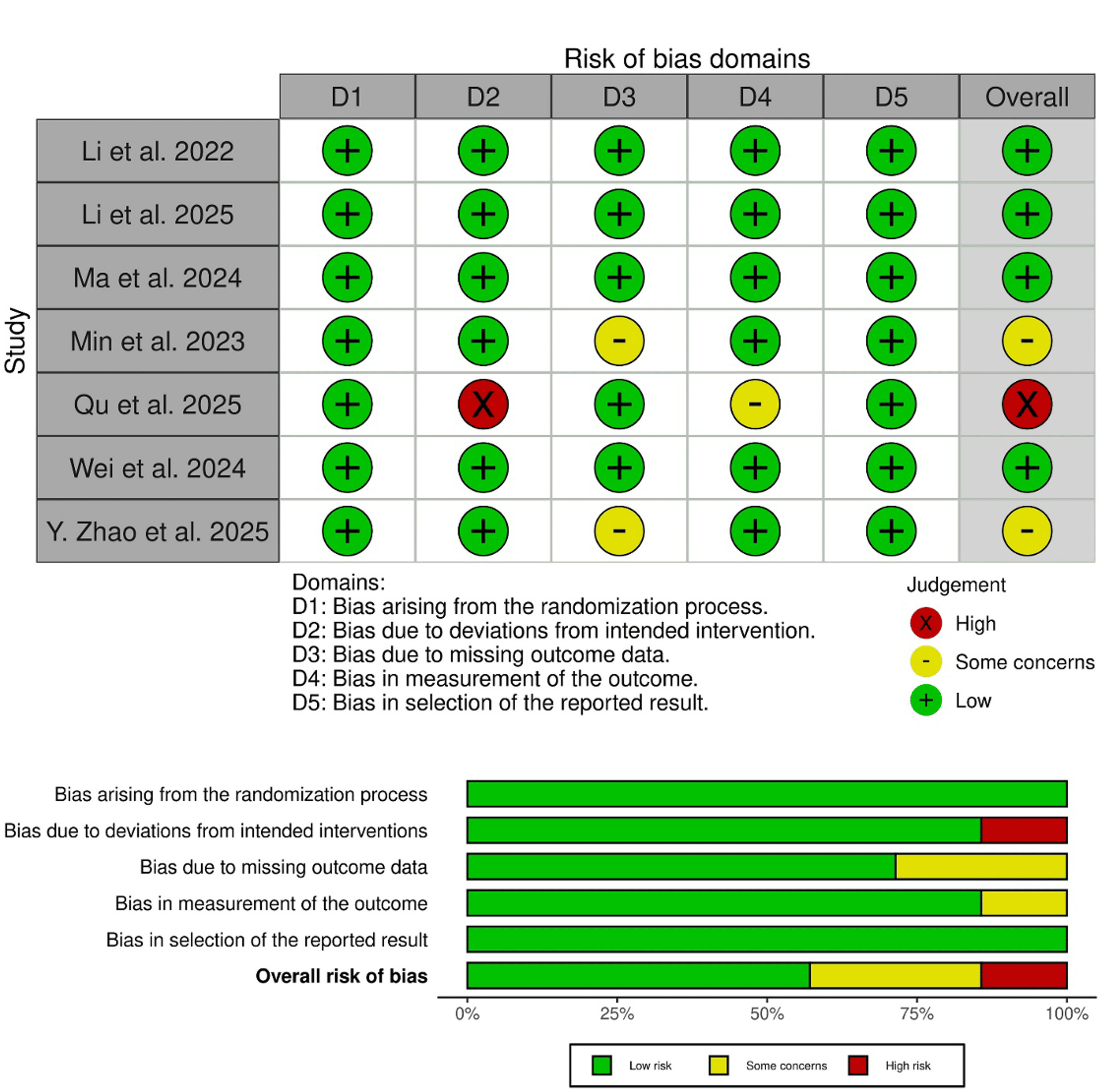
Four trials showed an overall low risk of bias [16-18,30], two trials showed some concerns of bias [19,29], and another trial had an overall high risk of bias (Figure 2) [20]. Min et al. raised concerns about attrition bias, as 18 of 150 patients were lost to follow-up, and the reasons for this were not detailed [29]. Additionally, Y. Zhao et al. raised concerns about attrition bias, as they employed a per-protocol analysis [19]. Finally, Qu et al. showed a high risk of bias due to deviations from intended interventions because of the open-label study design [20]. Furthermore, A GRADE summary of evidence in Table 3 outlines the certainty of evidence.
Primary Outcome: Pain
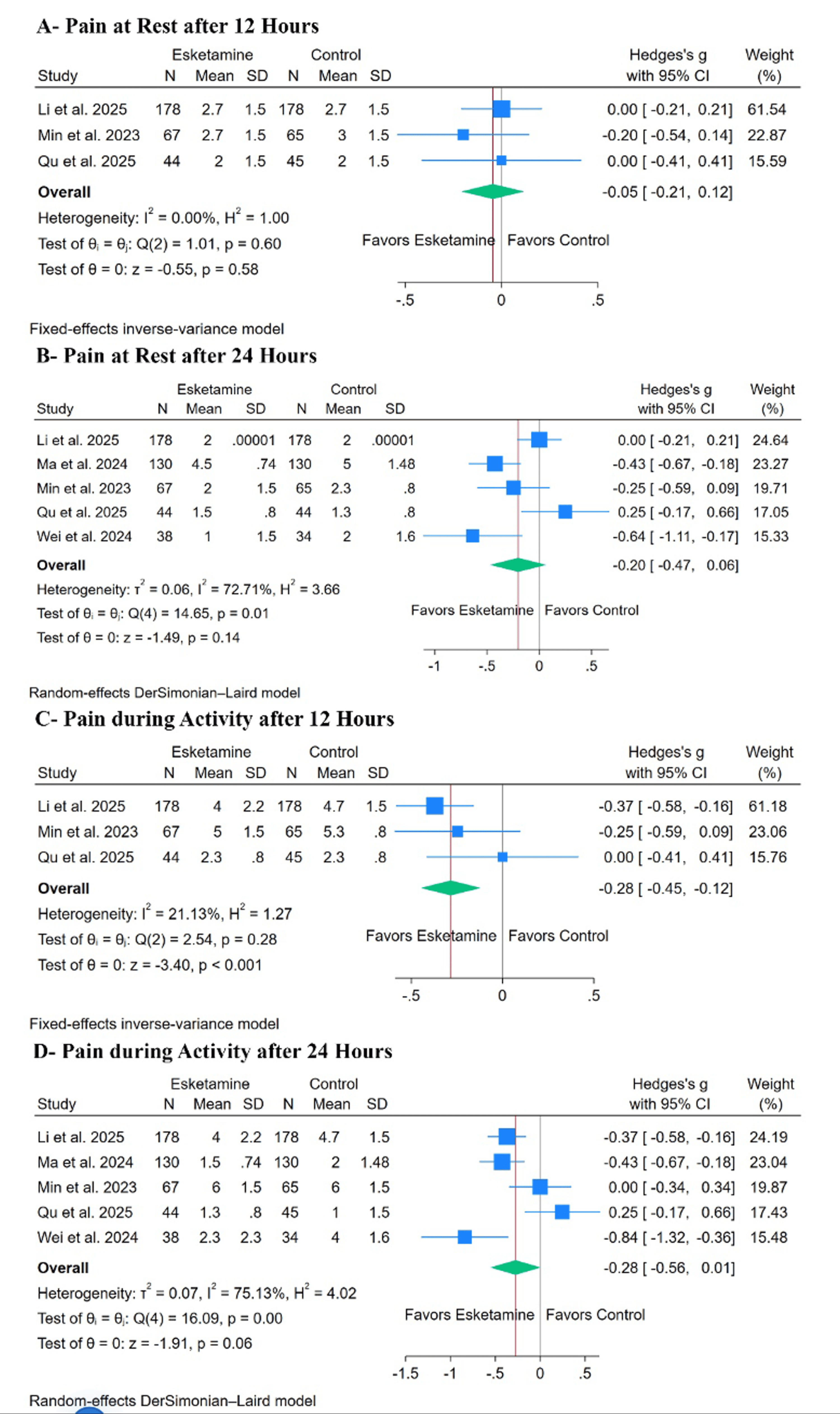
Esketamine did not significantly decrease pain at rest after 12 hours (SMD: -0.05, with 95% CI (-0.21, 0.12), p= 0.58, I²= 0%) (Figure 3A) or after 24 hours (SMD: -0.20, with 95% CI (-0.47, 0.06), p= 0.14, I²= 72.71%) (Figure 3B). However, esketamine significantly decreased pain during activity after 12 hours (SMD: -0.28, with 95% CI (-0.45, -0.12), p < 0.001, I²= 21.13%) (Figure 3C) but not after 24 hours (SMD: -0.28, with 95% CI (-0.56, 0.01), p= 0.06, I²= 75.13%) (Figure 3D).
For pain at rest after 24 hours, leave-one-out sensitivity analysis demonstrated instability of the pooled estimate, as the statistical significance of the result changed after omission of the Qu et al. [20] study. This finding suggests that the pooled effect may be sensitive to individual study influence and should therefore be interpreted cautiously (Appendix C, pane A). The Galbraith plot suggested that Qu et al. and Ma et al. were potential sources of the observed heterogeneity (Appendix C, pane B). For pain during activity after 24 hours, leave-one-out sensitivity analysis similarly demonstrated fragility of the pooled estimate, as statistical significance emerged only after exclusion of individual studies (Min et al. [29] or Qu et al. [20]). This suggests limited robustness of the observed effect (Appendix D, pane A). The corresponding Galbraith plot showed that Qu et al. are potential outliers and may be responsible for the observed heterogeneity (Appendix D, pane B).
Finally, the test for subgroup difference was not significant for pain at rest after 12 hours, either based on surgery type or timing of administration (P > 0.1) (Appendix E). However, significant pain at rest was observed after 24 hours, regardless of surgery type or timing of administration (P = 0.03) (Appendix F). Finally, it was not significant during activity in all scenarios (P > 0.1) (Appendices G, H).
Secondary Outcomes.
Intra-operative efficacy outcomes: Esketamine significantly decreased the surgery duration (MD: -2.06 minutes, with 95% CI (-4.02, -0.11), p= 0.04, I²= 0%) (Figure 4A). However, there was no significant difference between both groups in propofol consumption (SMD: -0.04, with 95% CI (-0.22, 0.15), p= 0.69, I²= 0%) (Figure 4B). The test for subgroup difference was not significant for surgery duration, either based on surgery type or timing of administration (P > 0.1) (Appendices I, J).
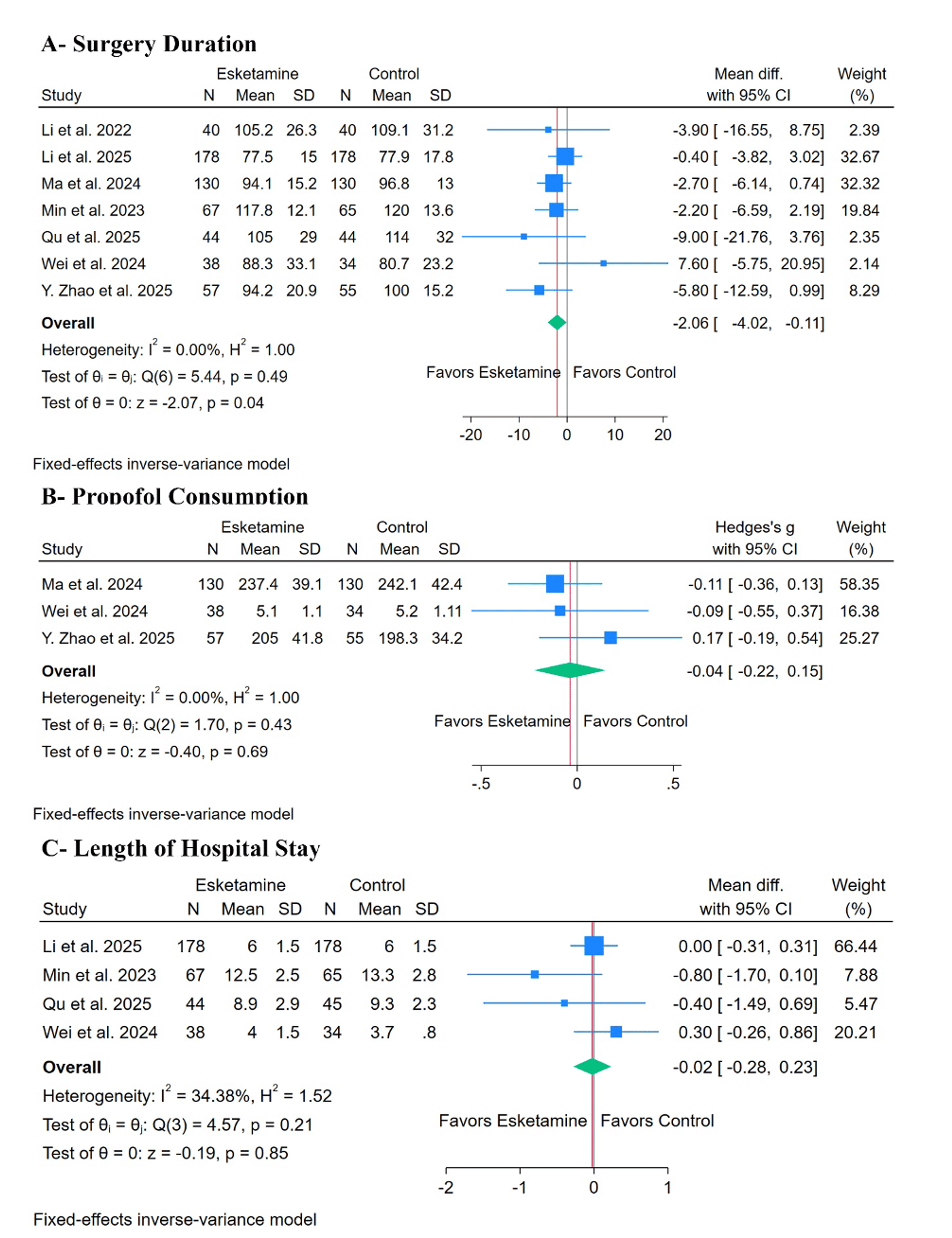
Post-operative efficacy outcomes: There was no significant difference between the two groups in the length of hospital stay (MD: -0.02 days, with 95% CI (-0.28, 0.23), p= 0.85, I²= 34.38%) (Figure 4C).
Regarding post-operative mood, esketamine did not significantly decrease depression scores at post-operative day 1 (SMD: -0.12, with 95% CI (-0.47, 0.22), p= 0.48, I²= 54.64%) (Figure 5A) or day 7 (SMD: -0.47, with 95% CI (-1.00, 0.06), p= 0.08, I²= 82.68%) (Figure 5B). Leave-one-out sensitivity analysis for depression at day 1 yielded consistent, non-significant results regardless of which study was omitted (Appendix K, pane A). The Galbraith plot indicated that Y. Zhao et al. were a potential source of heterogeneity (Appendix K, pane A). For depression at post-operative day 7, sensitivity analysis demonstrated instability of the pooled estimate, as statistical significance depended on exclusion of the Y. Zhao et al. study, indicating limited robustness of the finding (p = 0.007) (Appendix L, pane A), and the Galbraith plot identified Qu et al. as a potential outlier (Appendix L, pane B).
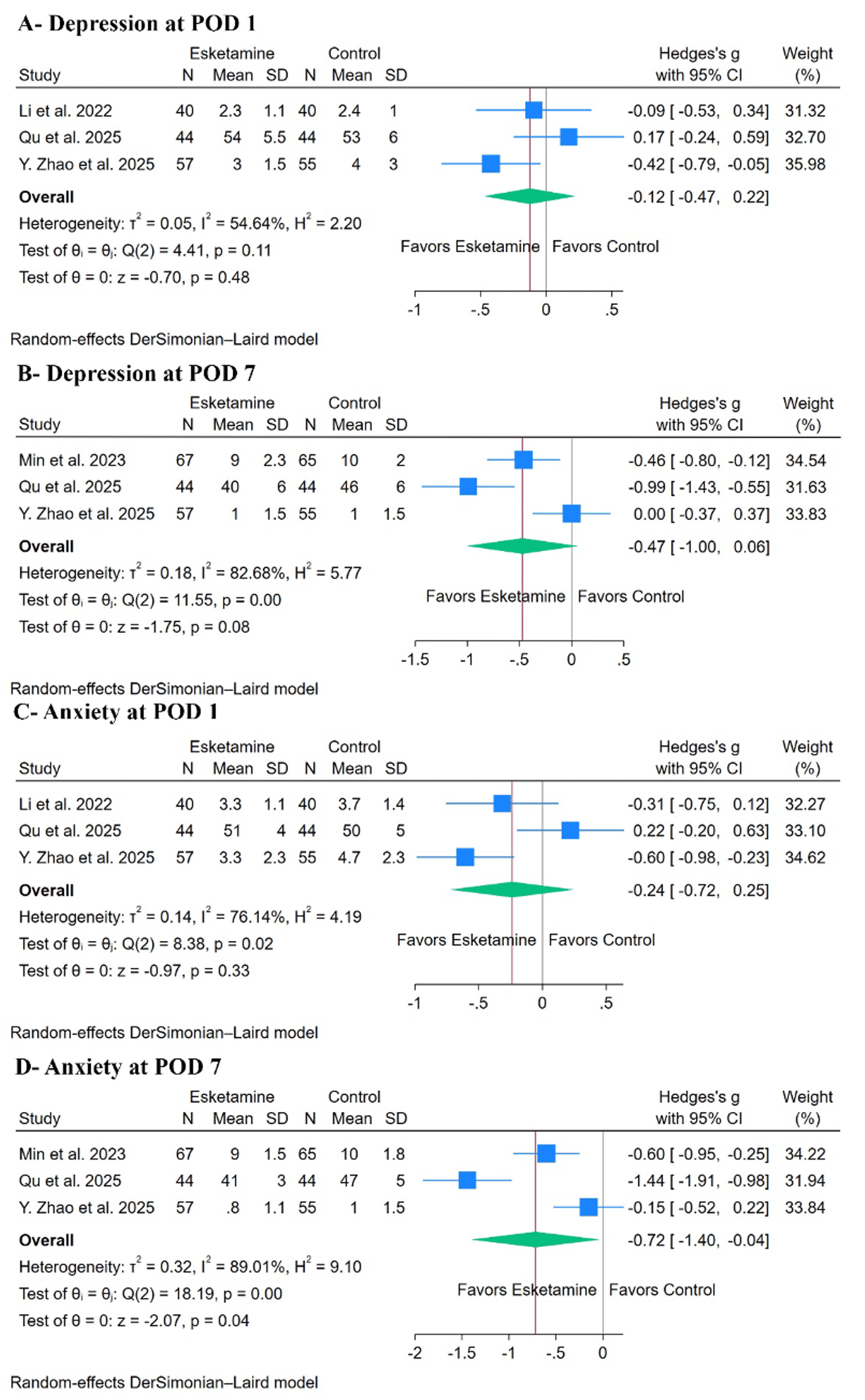
For anxiety, there was no difference between groups at post-operative day 1 (SMD: -0.24, with 95% CI (-0.72, 0.25), p= 0.33, I²= 76.14%) (Figure 5C). Sensitivity analysis for anxiety at post-operative day 1 demonstrated instability of the pooled estimate, as statistical significance emerged only after exclusion of the Qu et al. study (p = 0.001) (Appendix M, pane A), while the Galbraith plot identified Y. Zhao et al. as a source of heterogeneity (Appendix M, pane B). However, esketamine significantly decreased anxiety scores at post-operative day 7 (SMD: -0.72, with 95% CI (-1.40, -0.04), p = 0.04, I² = 89.01%) (Figure 5D). Leave-one-out sensitivity analysis showed that the statistically significant reduction in anxiety at post-operative day 7 became non-significant after exclusion of the Qu et al. study, suggesting that this finding may not be robust and should be interpreted cautiously (p = 0.090) (Appendix N, pane A). The Galbraith plot for this outcome identified Qu et al. as a significant outlier and source of heterogeneity (Appendix M, pane B).
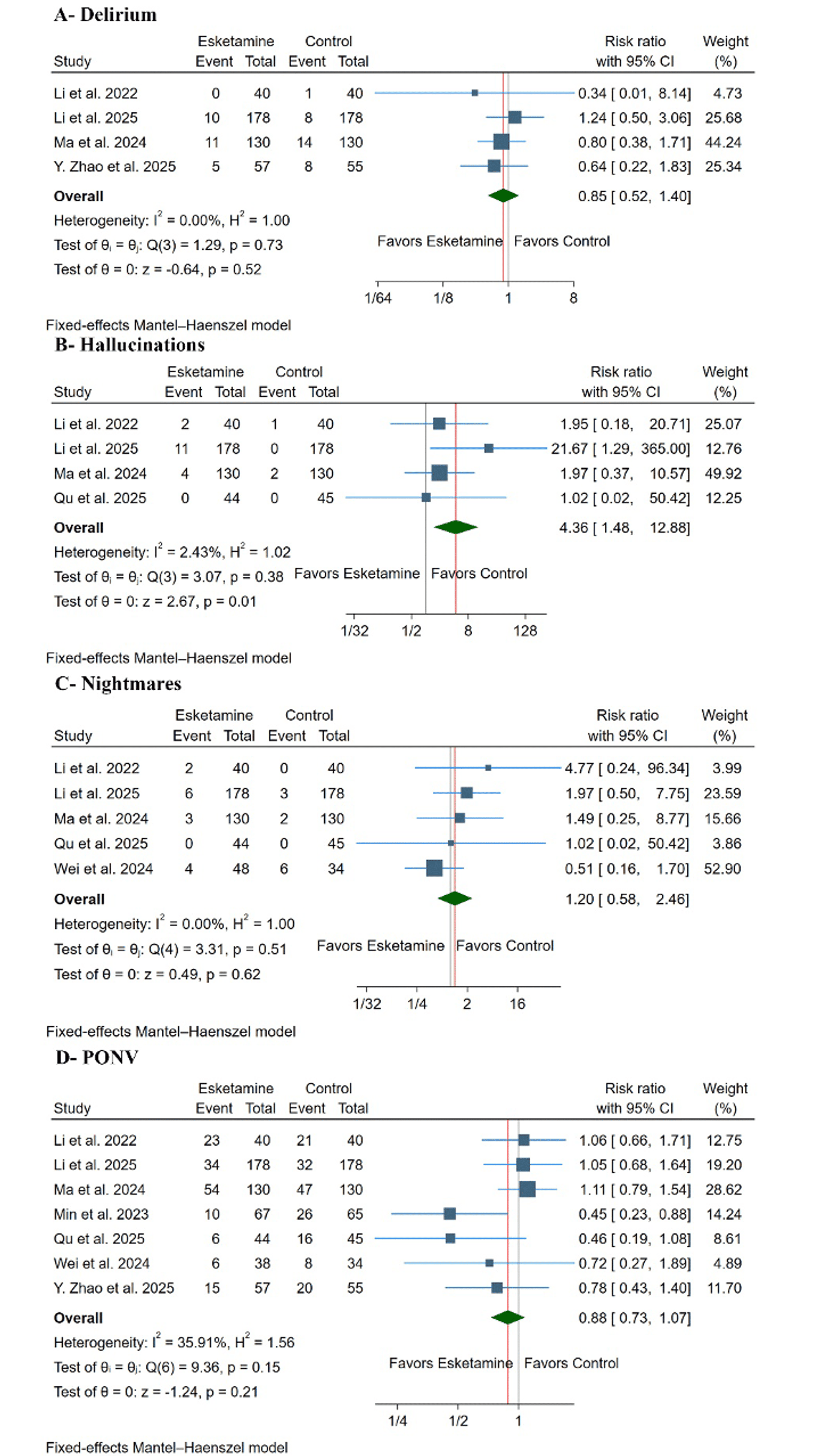
Safety outcomes: Esketamine significantly increased the risk of post-operative hallucinations (RR: 4.36, 95% CI (1.48, 12.88), p = 0.01) (Figure 6B). Across included studies, hallucinations occurred in approximately 4.3% of patients receiving esketamine compared with 0.8% in control groups, corresponding to an absolute risk increase of approximately 3.5% and an estimated number needed to harm (NNH) of 29. However, there was no significant difference between both groups in the incidence of delirium (RR: 0.85, with 95% CI (0.52, 1.40), p= 0.52, I²= 0%) (Figure 6A), nightmares (RR: 1.20, with 95% CI (0.58, 2.46), p= 0.62, I²= 0%) (Figure 6C), or PONV (RR: 0.88, with 95% CI (0.73, 1.07), p= 0.21, I²= 35.01%) (Figure 6D).
Discussion
This systematic review and meta-analysis synthesized data from seven RCTs encompassing 1,101 patients to evaluate the efficacy and safety of peri-operative esketamine in THA and TKA. The analysis showed a statistically significant but temporary decrease in post-operative pain, particularly during activity at 12 hours, along with a modest delayed anxiolytic effect observed seven days after surgery. However, the observed effect sizes were generally small (e.g., SMD: -0.28 for activity-related pain at 12 hours), suggesting limited clinical impact despite statistical significance. These limited benefits were contrasted with a statistically significant increase in hallucinations in the esketamine group. Still, the analysis demonstrated no significant advantage for several critical outcomes, including pain at rest, post-operative depression, post-operative delirium, and key recovery metrics, such as LOS.
The short-term reduction in activity-related pain at 12 hours may reflect esketamine’s anti-hyperalgesic properties through non-competitive NMDA receptor antagonism [31,32]. By reducing central sensitization, esketamine may transiently improve post-operative pain during mobilization. However, this benefit appeared short-lived, as no significant improvement persisted at 24 hours. Given the small pooled effect size and temporary duration, the overall clinical relevance of this analgesic benefit remains uncertain.
The reduction in post-operative anxiety on post-operative day 7 is also of interest and may relate to esketamine’s known antidepressant and anxiolytic properties mediated through glutamatergic modulation and downstream neurotrophic signaling [33,34]. However, this finding demonstrated important instability during sensitivity analyses, as exclusion of the Qu et al. study [20] rendered the pooled result non-significant. Several statistically significant findings were similarly sensitive to exclusion of individual studies during leave-one-out analyses, indicating limited robustness of some pooled estimates.
Despite modest short-term improvements in pain and anxiety outcomes, these benefits were accompanied by a statistically significant increase in post-operative hallucinations. Although esketamine has been proposed to provide effective multimodal analgesia with fewer psychomimetic effects than racemic ketamine [35-37], our findings suggest that clinically relevant psychological adverse effects remain an important concern. These experiences may be particularly distressing in older arthroplasty patients and could negatively influence post-operative recovery and patient perception of surgical care.
Our analysis showed no significant increase in the risk of post-operative delirium or nightmares. The absence of any impact on delirium is interesting, considering ketamine’s paradoxical history, as it has been studied as a possible preventive measure and identified as a potential contributor to delirium [35]. The difference between a notable rise in hallucinations and the absence of delirium might indicate that esketamine triggers a particular perceptual disturbance instead of a general cognitive issue defined by inattention and inconsistent awareness. The included trials did not explicitly investigate mitigation strategies of this effect, such as the co-administration of benzodiazepines [38], which are described in the literature. Such strategies could also introduce risks in elderly surgical patients, like over-sedation and potential delirium [37].
Furthermore, while our study focused on psychomimetic and delirium-related safety, the broader peri-operative management of THA and TKA involves vigilance against other critical complications, such as venous thromboembolism [39,40], periprosthetic infection [41], and adverse local reactions to implant materials [42]. Therefore, future studies may consider these complications while assessing esketamine safety.
Limitations
Several limitations should be considered when interpreting the findings of this meta-analysis. First, all included studies were conducted in China, which limits the generalizability and external applicability of the findings to other healthcare systems and patient populations. Differences in peri-operative protocols, multimodal analgesic strategies, healthcare delivery systems, and potentially cultural patterns of symptom reporting may influence both efficacy and safety outcomes across different regions.
Second, the included studies demonstrated substantial clinical heterogeneity regarding esketamine dosing regimens, timing of administration (intra-operative, post-operative, or both), peri-operative analgesic protocols, surgical populations (THA, TKA, or mixed cohorts), and outcome assessment methods. This variability limits the ability to attribute observed effects to a specific esketamine strategy and complicates straightforward clinical application.
Third, several statistically significant findings demonstrated instability during leave-one-out sensitivity analyses, suggesting limited robustness of some pooled estimates. In addition, the relatively small number of included studies for several pooled outcomes may reduce the precision and stability of the calculated effect estimates.
Fourth, publication bias and small-study effects should also be considered. Because fewer than 10 studies were available for most pooled outcomes, formal assessment using funnel plots or statistical asymmetry testing was not considered reliable. Consequently, positive findings may be overrepresented in the available literature, particularly for subjective outcomes such as pain and psychological measures.
Finally, although conventional random-effects meta-analysis using the DL estimator was applied, recent methodological literature suggests that this approach may underestimate uncertainty in the presence of substantial heterogeneity, potentially leading to narrower confidence intervals compared with more robust estimators such as Restricted Maximum Likelihood (REML) or Hartung-Knapp adjustment methods [43]. Therefore, statistically significant findings, particularly those with borderline p-values, should be interpreted cautiously.
Implications for Future Research
The current evidence base has considerable limitations, creating a clear and urgent need for future research. Future studies should prioritize a standard esketamine protocol to address the clinical variability that affected this analysis. Head-to-head comparisons of administration during surgery versus after surgery would be particularly valuable. Additionally, outcome assessment should not be limited to basic pain scores. Still, it should also incorporate validated, patient-centered measures, such as the Quality of Recovery-15 score, functional milestones, and long-term outcomes [44]. Safety monitoring requires enhancement; the proactive and systematic evaluation of psychomimetic effects using validated scales is necessary, rather than simply recording spontaneously reported adverse events. Finally, exploring strategies to reduce psychomimetic effects, such as co-administering dexmedetomidine, which may provide synergistic analgesia while opposing psychiatric symptoms, signifies an additional avenue for investigation.
Implications for Clinical Practice
It is essential to interpret our findings within the broader context of peri-operative care. Post-operative recovery following THA and TKA is a multifactorial process driven primarily by the extent of surgical trauma, the efficacy of multimodal analgesia, rehabilitation protocols, and individual risk factors [45]. While esketamine possesses unique pharmacological properties that may mitigate central sensitization, it is short-acting [46]. Therefore, the physiological plausibility that a brief intra-operative or peri-operative exposure to esketamine can meaningfully alter long-term outcomes such as mood or functional recovery remains debatable. The limited benefits observed in this meta-analysis may reflect the reality that a single pharmacological intervention is insufficient to override the subtle physiological and psychological stressors associated with major joint replacement surgery.
Additionally, it is critical to interpret some of our statistically significant findings within the context of clinical significance. Although esketamine reduced surgery duration by a mean of 2.06 minutes (p = 0.04), this difference falls below the threshold of clinical meaningfulness for major joint arthroplasty. Similarly, regarding analgesia, established literature suggests that the minimal clinically important difference (MCID) for post-operative pain on the 100-point VAS is approximately 10 mm to 20 mm [47]. Still, our analysis showed an SMD of -0.28 for pain during movement, which generally translates to a raw reduction of less than 10 mm on the VAS, suggesting the analgesic benefit may be marginal or sub-clinical for many patients. In contrast, the reduction in anxiety on post-operative day 7 (SMD -0.72) represents a medium-to-large effect size that likely exceeds the MCID for hospital-associated anxiety [48], pointing to a potentially meaningful psychiatric benefit rather than an analgesic.
Conclusions
In patients undergoing THA or TKA, peri-operative esketamine may provide a modest and short-term reduction in activity-related postoperative pain. A possible delayed reduction in postoperative anxiety was also observed; however, this finding demonstrated instability during sensitivity analyses and should be interpreted cautiously. Esketamine was additionally associated with a significantly increased risk of post-operative hallucinations, while no significant differences were observed in delirium, nightmares, or postoperative nausea and vomiting. Overall, the clinical benefits appear limited and temporary, and routine peri-operative use of esketamine in this setting cannot currently be strongly recommended given the imbalance between modest benefits and potential neuropsychiatric adverse effects.